Badgers Go Green: A Story of Environmental Practices and Ecological Culture at UW–Madison
By Nicolás Felipe Rueda Rey
The research in this publication was completed as a part of the University of Wisconsin–Madison’s Rebecca M. Blank Center for Campus History. The Center seeks to expand and enrich UW–Madison’s historical narrative by centering the voices, experiences, and struggles of marginalized groups. The Center grew out of the Public History Project which culminated in the Sifting & Reckoning physical and digital exhibition in the fall of 2022, curricular tools, an event and lecture series, and a final report. By sharing research, we hope to continue conversations about the history of UW–Madison and discuss how we can all work towards building a more equitable campus community. The nature of historical research is that it will always be incomplete. It is impossible for us to know everything that happened in the past. Therefore, the research in this post is imperfect, as all history is. Our researchers have completed the research below with all of the historical documents available to them at the time of publication.
The rise of environmental awareness on the University of Wisconsin–Madison campus can be traced back to the broader societal movements of the 1960s, including the civil rights movement and anti-war protests, which fostered a climate of activism and social change. [1] This form of environmentalism was grounded in the urban areas, with a deep concern in in human health and natural ecosystems. [2] The movement emerge in multiple fronts, responding to both local and global socio-cultural and environmental impacts caused by the Great Acceleration — an unprecedented and unequal post-World War II growth in socioeconomic and earth systems trends. [3] It was a moment in which the interconnectedness of urbanization, the perception on population growth, and the practices of production and consumption on a planetary scale caught the attention of the local UW campus ecological groups. As a result, students, faculty and Madison’s communities increasingly engaged with issues like pollution, conservation and public health: a complex environmental consciousness began to take root, influencing both campus culture, policy and its institutions.
In 1974, Mark Koppelkman, a UW–Madison student and chairperson from the Hoofer Ecology Club, wrote a letter to Chancellor Edwin Young highlighting the necessity of a “permanent environmental student-faculty committee’ that would help to “simplify and solve past and current environmental problems”. [4] In the letter, Koppelkman aimed to summarize the recommendations put forward by the students of the defunct Ecology Students Association and the Teaching Assistants Association (TAA), who since 1969 had advocated on issues such as ‘motor vehicles, buses, power plant emissions, land use planning, waste disposal, runoff, pesticide use,’ among others. Koppelkman felt it was necessary to reinforce campus environmental responsibilities through the consolidation of a campus environmental committee that would rectify the situation. This committee should include students, faculty, administration, and university staff. Koppelkman’s letter echoed the growing sense of urgency surrounding environmental concerns and the need for collaborative action to address them. The proposal highlighted how student-led initiatives had already shaped the conversation on campus, positioning them as key players in the future of environmental policy and action at the university.
Koppelkman’s understanding of the problem was collective, student-oriented, multidimensional and interdisciplinary. The urgency he identified was informed by various knowledge sets, and his reflections were shaped by a growing campus culture advocating for a modern environmentalism. How did this campus culture emerge? What factors contributed to its development? How did this campus culture take shape during the 1960s and the 1970s?
The 60s: Local and Collective Health Visions on the Environment
On campus, the practices and representations in relation to the environment underwent slow and progressive transformation until their institutionalization at the end of the 1960s. These moments were not isolated, but rather part of a broader, growing awareness that linked academic, social and political spheres, gradually shaping the campus’s environmental consciousness. From grassroots activism to institutional support and communitarian movements, these early efforts laid the foundation for the environmental movement on campus and programs and initiatives that would follow in the years to come.
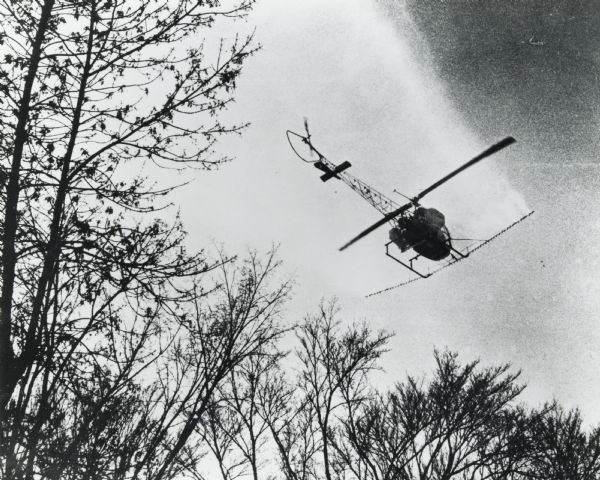
In American postwar suburbanization and consumer-centered narratives and landscapes, ‘weeds’ and ’bugs’ became the new target of chemical corporations. Beginning in 1942, DDT (Dichlorodiphenyltrichloroethane) was used against mosquitos that spread malaria among U.S. troops in the South Pacific. At the conclusion of WWII, DDT’s prestige was settled and it was widely used all over the urban and rural landscapes in the U.S. [5] In the late 1960s, the Wisconsin Plant Industry Division used helicopters to spray DDT over trees and kill beetles that carried Dutch Elm Disease. The widespread use of DDT in agriculture, for public health, and pest control during this time went largely unquestioned until the mounting concerns about its environmental impact began to be discussed in popular culture. The chemical’s pervasive presence in ecosystems and its accumulation in the food chain sparked a growing public alarm, leading to a broader reckoning about its long-term effects on wildlife and human health.
Today, we know that the environmental hazards were widespread, but at the beginning of the 1960s, the debate gained national visibility with Rachel Carson’s Silent Spring. In her book, as well as in her public appearances on radio and TV, Carson advocated for raising conscience about the interconnectedness of ecosystems:
The earth’s vegetation is part of a web of life in which there are intimate and essential relations between plants and the earth, between plants and other plants, between plants and animals. Sometimes we have no choice but to disturb these relationships, but we should do so thoughtfully, with full awareness that what we do may have consequences remote in time and place. [6]
The importance of an ethical interconnectedness between nature and human became a guiding reflection in Carson’s Silent Spring, where she highlighted the far-reaching consequences of human actions on the environment and through the generations. Silent Spring had a profound impact on public awareness regarding the dangers of chemical pesticides, sparking widespread controversy and debate. Despite aggressive campaigns from chemical manufacturers to discredit the book, Carson’s work led to government action, with President Kennedy ordering a study on chemical effects on production and numerous state bills introduced to regulate their use.
Carson’s work represents a cultural shift in the public’s understanding of ecology and modern environmentalism. [7] The suburban audience received her book with enthusiasm and felt a strong identification with her thesis about the excessive and irresponsible use of pesticides and their impact on human and environmental health. With deep, well-thought-out observations and analytical, ecological reflections, Carson adapted and applied the teachings of previous ecological science, understanding suburban ecosystems as interconnected and interdependent systems. Carson emphasizes humans’ ability to drastically alter ecosystems beyond their capacity to recover. As a result, DDT became a symbol of the dangerous consequences of unchecked chemical use, fueling the environmental movement’s calls for greater regulation and awareness. This period marked the beginning of a larger societal shift towards environmental responsibility and the reevaluation of humanity’s relationship with nature.
The case of pesticides like DDT highlighted the chemical industrial complex, and the impacts of different types of pollution on all beings and ecosystems. At UW–Madison, 1967 represent a turning point in campus advocacy for civil rights and against the recruitment of student by military contractors, most notably the Dow Chemical Company, which manufactured napalm used in the Vietnam War. [8] On the morning of October 18, hundreds of students gathered outside the Commerce Building (now Ingraham Hall), where Dow Chemical recruiters were interviewing students for prospective jobs. Tensions escalated in the afternoon as police attempted to remove protesters blocking access to the building, leading to violent clashes between students and police. Riot sticks were used, and tear gas was deployed, resulting in numerous injuries and chaos throughout the campus. By the end of the day, more than 3,000 students had assembled for a rally, demanding that the administration take a stand against the use of city police on campus and showing their solidarity with protesters. [9] This event marked a defining moment in the university’s history, solidifying UW–Madison as a space for the culture of antiwar sentiment and student activism.

David Lipsky, a biochemistry major from 1965 to the early 1970s, participated as one of the officers of the antiwar movement on campus who pushed for the vote against the war in Wisconsin. [10] In this broader campus culture of advocacy, Lipsky also recalled how scientific and artistic groups created the Science Student Union (SSU) to get involved in raising awareness about environmental issues they faced at the time. This interdisciplinary group of students organized regular workshops with scholars like Paul R. Ehrlich, on topics such as the “Population Bomb”, but also on anarchism and ecology with Murray Bookchin, and other critical ideas on the energy crisis, control of pollution reports, and monopolization of oil business. They were also involved in a ‘Guerilla Theater’ group that performed during a hearing at the Wisconsin State Capitol, with Lipsky recalling how they dressed in military camouflage and marched into the Capitol carrying water guns. [11]
One of the group’s main achievements came in 1968 with their involvement in the first lawsuit against the use of DDT in Wisconsin. Organized by local and national environmental groups, the lawsuit was supported by the SSU. The main arguments emphasized DDT’s toxic effects on wildlife, particularly birds, and the long-term consequences of pesticide accumulation in ecosystems. This legal action aimed to hold chemical manufacturers accountable for the environmental damage caused by their products and to push for more regulations on pesticide manufacture and use. The SSU played a crucial role in building the case and fighting against arguments defending the use of DDT. Lipsky remembers going to the library to read, investigate, and analyze every source quoted by the Chemical Manufacturers Association, an influential U.S. trade organization that represented the interests of major chemical corporations and actively defended the production and use of DDT. This effort exemplified the growing activism on campus, as students took a clearer agency in shaping environmental policy. It also marked a pivotal moment in the broader environmental movement, one where student-driven initiatives began to challenge powerful industries and influence local legislation. Through their persistence and determination, these students laid the groundwork for future environmental advocacy at both the state and national levels. [12]

However, the early environmental movement in this era was still taking shape and was primarily represented by suburban, white communities. The recognition of how environmental hazards intersect with issues of race and gender was still emerging on campus, and in the early stages in the rest of the United States. At UW–Madison, for example, Black the student community developed numerous protests addressing concerns over racial and educational inequality, while advocating for the establishment of a Black Studies department and significant changes to university policies and practices. [13] Nevertheless, some intellectuals such as Nathan Hare, were already cognizant of the emerging environmentalist movement’s significance for marginalized communities. He highlighted the importance of Black ecology once “the black and white environments not only differ in degree but in nature as well […] the causes and solutions to ecological problems are fundamentally different in the suburbs and ghetto […] the solutions set forth the ‘ecological crisis’ are reformist and evasive of the social and political revolution which black environmental correction demands”. [14] All over the country, the environmental crisis in Black urban communities was deeply intertwined with systemic economic and racialized sociocultural inequalities: overcrowded and polluted living conditions, with hazardous occupations and inadequate housing. For some sectors at the end of the 1960s it was clear that true environmental reforms were complex and required more than superficial solutions; it demanded a fundamental shift in economic and political structures to empower marginalized communities and address the root causes the longstanding environmental injustice.
The Institute for Environmental Studies: Collective efforts and the Institutionalization of Interdisciplinary Practice
These individual and collective practices of modern environmentalism resonate with the institutionalization of an environmentally driven entity at the University of Wisconsin–Madison at the end of the 1960s. The emergence of the Institute for Environmental Studies (IES) as aneducational center was part of a broader campus mindset incorporating contemporary discussion and the most relevant societal debates around the environment. IES became central not only for addressing pressing ecological challenges, but also for influencing the broader environmental movement, fostering collaboration across disciplines and integrating environmental concerns into academic and public policy.
Since the early 1960s, interdisciplinary groups of faculty and students at UW–Madison were actively engaged in addressing contemporary environmental issues. In 1962, The Interdisciplinary Studies Committee and The Hougas Committee, for example, were concerned with the contemporary problems that transcend disciplinary boundaries, demanding a more integrated approach to better attend to problems such as war and peace, land use, and environmental degradation, among others. [15] These groups pushed to spread awareness on campus about the necessity of putting more effort in the study of environmental situations from an interdisciplinary approach. All these early efforts were not just academic exercises; they reflected a growing recognition that environmental problems could not be solved within the confines of traditional disciplines. By advocating for interdisciplinary collaboration, these groups laid the groundwork for the institutionalization of environmental studies, which would later become a model for other universities and a key driver of the environmental movement.
In 1965, the Special Committee on Environmental Studies was created to review environmental research proposals, recommend strategic administrative measures, and strengthen environmental studies on campus. [16] With a representative appointed by each one of the deans, the committee presented a 1966 report in which they recommended that the university should establish a budget unit for interdisciplinary environmental studies, be led by a director reporting to the chancellor, and include the participation through the transference of existing environmental studies groups and research processes. [17] However, these efforts didn’t gain immediate traction at the time. Looking back, these early efforts reflect a pivotal moment in the university’s commitment to addressing the pressing issues of the time. The foundation laid by these interdisciplinary groups not only developed a deeper engagement with environmental challenges but also set the stage for the establishment of more structured environmental studies programs that would continue to evolve in the years that followed.
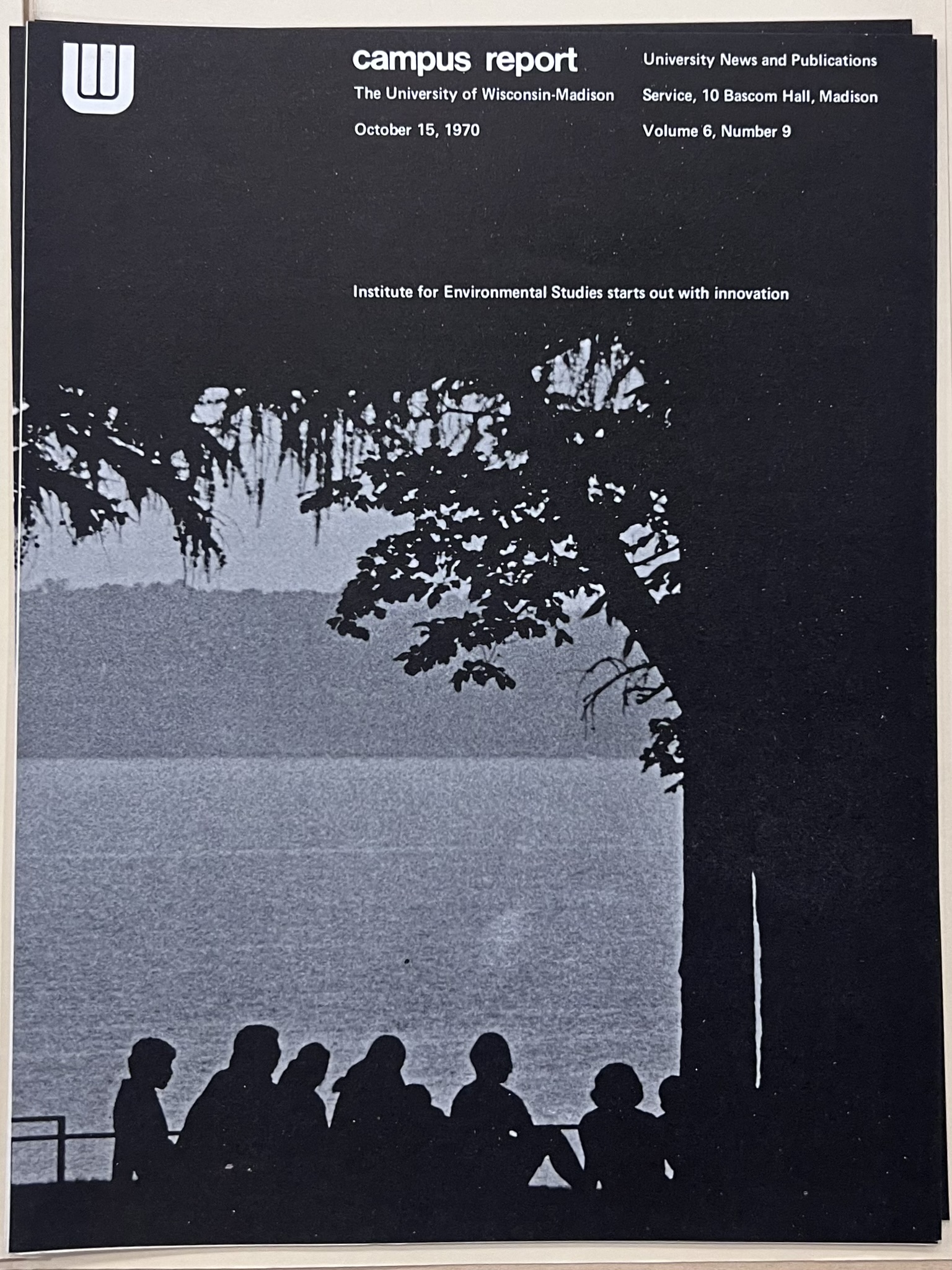
In May 1969, a report titled “The Purpose and Function of the University” was prepared and presented by the Interdisciplinary Studies Committee on the Future of Man, to the Special Regents Committee on The University of Wisconsin of the Future, highlighting the urgent need for interdisciplinary approaches to foster creativity in students and addressing contemporary societal challenges. This formal proposal pointed out the urgency for “interdisciplinary groups in which competence is not defined solely in terms of disciplines that have been in existence for 50 or 100 years. We should recognize scholarship that is individual and … is built from components of several older disciplines. We could find satisfactory ways to recognize such scholarship for the future just as we have found ways to recognize scholarship in the past.” [18]
By pushing for the recognition of interdisciplinary scholarship, the report laid the groundwork for a new kind of academic framework, one that would encourage innovation and adaptability in both students and faculty. The proposal called for more than an academic shift, but a response to the pressing socio-environmental challenges that were beginning to demand more holistic and collaborative solutions. However, in its response, the university emphasized the need for a deeper analysis and study of the current situation. The proposal, while insightful, did not receive immediate approval by the Board of Regents and instead led to calls for more revisions and refinements. This hesitation reflected the tensions of integrating such an approach into the existing academic structure and highlighted the difficulty in reconciling traditional disciplinary boundaries with the growing relevance and awareness of interdisciplinary cooperation for environmental topics.
In December of the same year, the committee, now popularly known as the “Wilson Committee”, [19] presented a new proposal to Chancellor Edwin Young regarding the function and organization of the IES. Emphasizing concern about the future, they reaffirmed that the goal of the university was “to provide society with objective information and imaginative approaches to the solution of problems, which can serve as the basis for sound decision-making in all areas”. [20] However, they were also concerned about the lack of attention given to the ‘future viability of society’ within the university’s structure. The new argument of the committee emphasized the role of the university as an institution that creates an environment in which “faculty and students can discover, examine critically, preserve, and transmit knowledge, wisdom, and values that will help ensure the survival of the present and future generations”. [21] Scholars advocating for the institutionalization of the IES based their arguments on the need for structural changes at the university. They emphasized the responsibility of future generations to confront the passivity (or complicity) of their contemporaries toward various environmental hazards.
In 1970, the IES was announced, and a director was appointed by the chancellor. The Marine Studies Center, the Center for Climatic Research, and the Lake Wingra Study of the Eastern Deciduous Biome from the International Biological Program all incorporated their research into the IES. [22] Enthusiasm grew as the IES expanded the scope of interest by winning a general grant from the National Science Foundation, the Rockefeller Foundation and the Graduate School. With the support of the Research Applied to National Needs Program (RANN) of the National Science Foundation, IES developed “several reports on a broad range of subjects, from cultural sensitivity to environmental change and quality of life in a western Wisconsin river valley to a mathematical model for outdoor recreation management and an in-depth look at glass recycling and reuse”. [23] At the same time, this funding helped IES strengthen the establishment of five research centers and two research groups: the Marine Studies Center, Center for Biotic Systems, Center for Climate Research, Center for Geographic Analysis, and Center for Human Systems; and the Quantitative Ecosystem Modeling Group and the Environmental Monitoring and Data Acquisition Group.
In a very local way — by emphasizing the Wisconsin Idea — the IES was part of an intense dynamic surrounding ethics, knowledge, and the construction of environmental justice. With the consolidation of the IES as a formal entity with specific goals and a solid agenda, the collective consciousness of environmental problems and their complexities began to flow through local, regional, and national cultural battlegrounds, driven by the ecological and political movements all over the country, and supported by prominent like U.S. Sen. Gaylord Nelson. As the 1970s approached, these growing environmental concerns and the momentum generated began to take shape in widespread societal movements, culminating in the first Earth Day.
The Badgers Go Green: Earth Day, Collective Efforts and the Consolidation of Modern Environmentalism on Campus
With the institutionalization of environmentalism within the university’s structures, and what seemed like a clear course of action, the campus — and the community beyond — became a stage for research, debate and reflection on environmental issues. The spring months of 1970 were intense as UW students turned out to create cultural spaces to discuss and explore the ideas around environmentalism, push for institutional changes, and figure out the logistics for the first Earth Day.
On January 3, 1970, UW–Madison student Judy Royster published an article in The Daily Cardinal reviewing the preparation of a report that the Ecology Students Association (ESA) would present to Vice Chancellor Robert Atwell. The report outlined recommendations to address pressing environmental issues including pollution, resource exploitation and overpopulation. They argued that pollution, particularly from the internal combustion engines in vehicles and the university’s steam plant, severely degraded the environment, urging the university to adopt more sustainable practices, even if it meant higher costs in the long term. The ESA also suggested measures to control the silting of Lake Mendota, cease the use of high-phosphate detergents, restrict pesticide use (including ending field testing on university property), and manage current noise levels. [24]
At the same time, the students’ culture was deeply embedded in complex forms of Malthusian ideas on overpopulation and supported population control policies that today might seem authoritarian. This practice of environmentalism was rooted in natural science and a Malthusian utilitarian perspective that links human health and survival with environmental conditions. [25] The ESA report recommended that the “most pressing single problem facing the world today is the population explosion. The principle of the two-child family must be established as the American norm and ideal.” [26] For this purpose, ESA concluded, the university should provide birth control information, contraceptive devices or prescriptions, and an abortion referral service. These recommendations can seem paradoxical today. On one side, the Malthusian idea of population growth, while problematic and based on bad understanding of ecological damage and causality, was grounded in concern over a real, urgent global environmental crisis. On the other hand, even as ESA advocated for free education and access to family planning care, the suggestion that governments should intervene in reproductive rights with the policy of the “two-child family” reproduces paternalistic and authoritarian perspectives, undermining individual and collective reproductive rights and freedom. Today, we know that this type of environmentalism fosters the consolidation of “oligarchic practices”, limiting the participation of citizens and the democratization of environmental advocacy. [27]
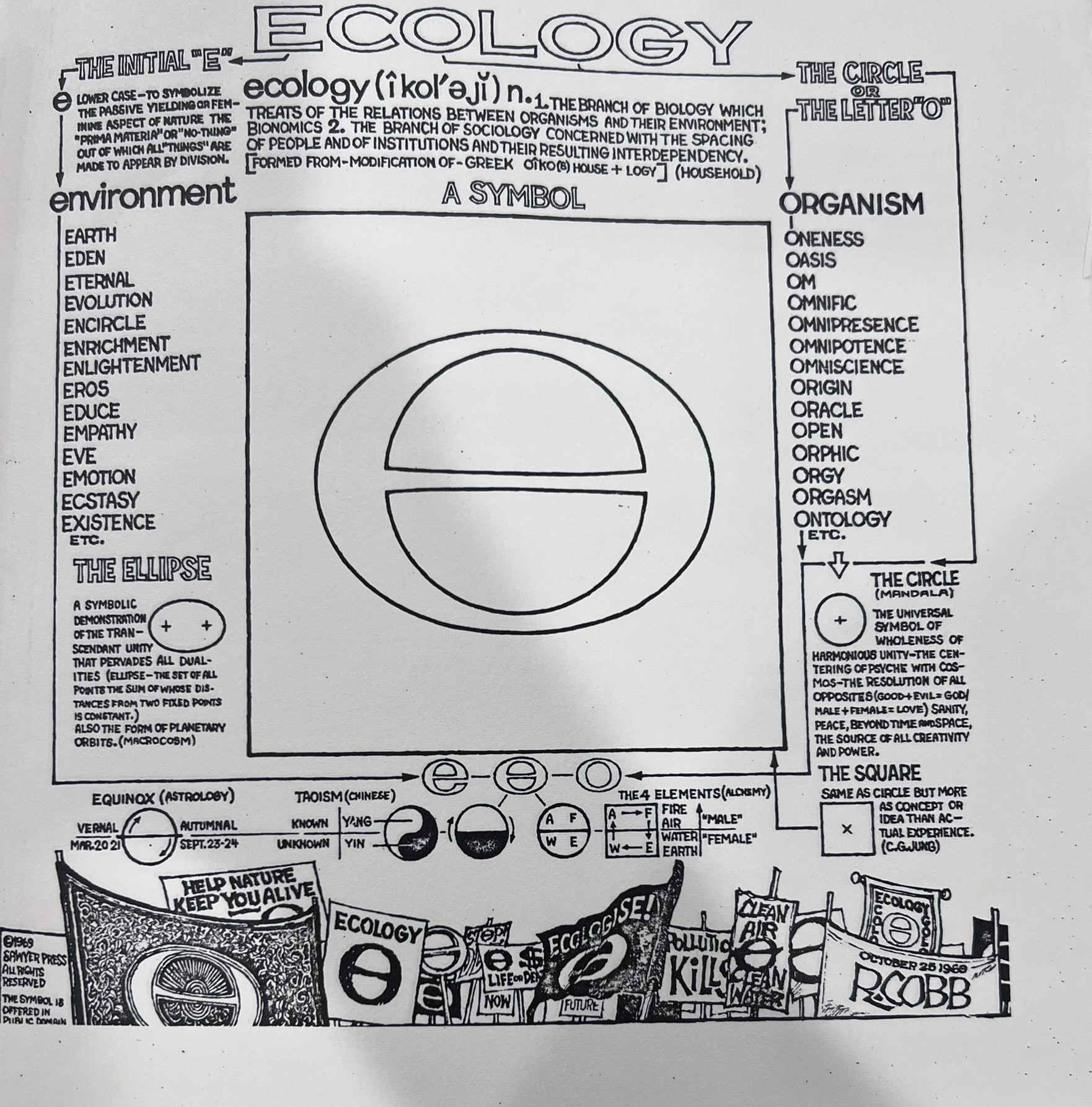
In a January 29, 1970, newsletter, Tom Smith, Earth Day staff director at UW–Madison, explained that Earth Day was a national and local rallying effort to raise awareness of the environmental crisis, initiating action to educate the community, campus, and schools in restoring the balance between humans and nature. The focus on educating the community implied something more than a day of celebration. Instead the program from the Earth Day committee envisioned a broader cultural strategy that involved students, collectives, and institutions into the environmental reflection and experimentation. These efforts also found support from local churches in the southern Wisconsin area. For example, each Tuesday in April that year, clergy members delivered seminars with “Man’s Environment: God’s Creation” as a central theme. [28]
Education activities in the runup to Earth Day also included art and culture presentations. Throughout February of that year the Hoofers’ Ecology Group ran a film festival to showcase a series of films about ecological hazards, contemporary environmental issues, and the importance of collective awareness and action. [29] They promoted books like Ecotactics: The Sierra Club Handbook for Environment Activists, and The Environmental Handbook: Prepared for the First National Environmental Teach-In. The goal was to empower and foster a sense of collective and shared responsibility for the planet’s future. [30]
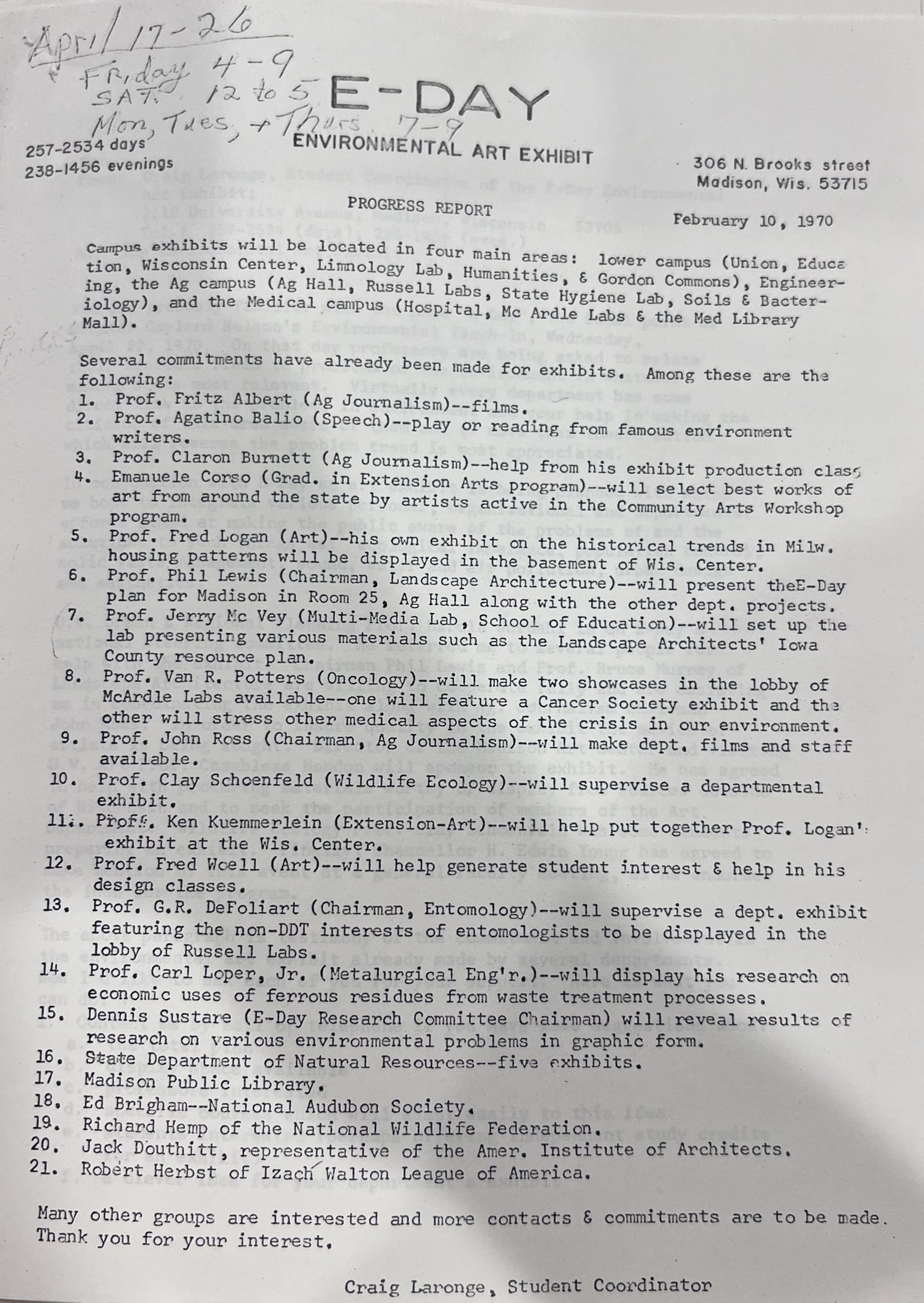
By March, students and faculty converged in collaborative efforts to organize activities, manage political action, and host cultural and educational events open to the entire Madison public. Campus saw an explosion of student-led environmental action and advocacy groups concerned with ecological discussion, reflection and activities. These included the Ecology Action Center, the Ecology Student Association, Engineers & Scientists for social responsibility, and the Society to End Pollution, among others. Each group contributed to fostering awareness and promoting sustainable practices on campus. [31] Additionally, various public lectures were organized to address critical environmental issues. Professor Arthur Hasler, director of the UW Limnology Lab, gave a public lecture on lake pollution; Professor Rosemary Flemming spoke about the Arboretum and the relevance of local natural environments; and Professor Joseph Hickey discussed the vanishing of wildlife in the area. These lectures were held every Thursday. [32] This movement also inspired a wave of hands-on initiatives that brought the campus community even closer. Students and faculty organized workshops and recycling projects, turning everyday waste into useful items. Arts expositions were made from recycled materials, blending creativity with environmental messages.

From April 19 to 25, Wisconsin witnessed the first Environmental Action Week, with the first Earth Day as the main event. In the image above, a group of students engaged in environmental activism march on the intersection of Lake and State Streets, right at the heart of the campus. They’re rallying for the upcoming Earth Day celebration, waving flags and fueling fiery chants that carried all the way to the Capitol, long after they arrived. The march was more than a display of passion, it was a call for action, a statement in a long chain of warnings about the urgency of addressing environmental issues in a changing world. Students from different backgrounds and disciplines were united by a common cause. [33] Their chants echoed throughout the streets, energizing others and drawing attention to 1970 citizens of Wisconsin and the world. The event was part of a bigger wave that had been building up on campus for weeks. Students, faculty, and local environmental groups all came together, vibing on the same mission—pushing for real, impactful change. The energy was vibrant, and the message very clear: The fight for the environment was just starting.
On April 22, 1970, Earth Day itself took place in Wisconsin, as well as all over the country. The grassroots student and campus movement experienced a great realization and Madison emerged as center for environmental protest in the last quarter of the twentieth century. The day was full of memorable events. At Picnic Point there was an attempt to create a “spiritual atmosphere for viewing the natural environment” through music, poetry reading, and critical analysis of authors like Rachel Carson, Aldo Leopold and Henry Thoreau. [34] Building on the creative energy and spirit of the time, the city of Madison witnessed a massive parade that brought together students, faculty, and the community in an environmental celebration. Starting at 2 p.m. at the UW Library Mall, the parade swept eastward on State Street, then circled around the Square before making its way back to Langdon Street. [35]
Finally, “Environmental Affair” event marked the closing of E-Week at 4 pm on April 25. [36] This event embodied the joy and unity around environmental concerns, as well as the spirit of change and transformation. With dancing, live music, booths, electric cars, and displays, the festivities were complemented by street clean-up campaigns that took place before and after the event. The entire community participated, making it a true celebration of collective action and environmental awareness on the UW campus, and the whole city of Madison. Beyond that, it helped to create, enhance, and consolidate an imagined community connected by shared environmental concerns across the country, and later, the world.
Conclusion
Environmental concerns are deeply connected with the Wisconsin community, shaping the local identity and driving collective action toward ecological sustainability and conservation. Key actors at the beginning of the century plant the seed for the emergence of the movement. Its materialization took place in the 1960s with the institutionalization of IES and its research agenda, the interdisciplinary academic programs, and classroom curricula focused on sustainability, conservation, and ecological stewardship. This embodied the Wisconsinite spirit that articulated the grassroot movement and took form in the Earth Day celebrations at UW–Madison and all over the country.
Earth Day would become a vibrant commemoration of ecological concerns, with local, regional, national and international resonance. In the Midwest, many institutions would engage with cultural initiatives to continue raising awareness on environmental issues. “Earthwatch,” for example, a radio show aired for the first time on September 11, 1972, played significant role in bringing attention on environmental issues, especially in the Wisconsin area, but also in Michigan, Ilinois, and Minnesota. It was transmitted daily and highlighted local concerns and connected them to broader ecological themes, helping to educate the public on the importance of environmental responsibility. This radio show was part of a larger cultural mass movement during the whole decade that started with Earth Day. As environmental awareness was gaining momentum, it led to critical legislation and initiatives aimed at protecting natural resources.
At UW–Madison, celebrating the first decade of Earth Day, Gaylord Nelson participated in a forum sponsored by the IES, where he reflected on the early years of the environmental movement. In evaluating the progress made, he highlighted the significance and reach of the environmental political agenda. For Nelson, the positive changes were evident across many areas:
Great rivers such as the Hudson, Potomac, Detroit, and Mississippi, once choked with pollution, are beginning to sparkle again. Our air, a serious health threat in some cities, is growing cleaner. We have been alerted to threats from hazardous products and wastes that we didn’t know about before. Recycling, energy conservation, and the use of renewable resources are becoming more popular. Growth policies seek greater balance between development and preservation. And the environmental movement has produced jobs and stimulated new economic activity. [37]
Nelson’s reflection emphasizes both the progress achieved and the continuing momentum of the environmental movement, showing its lasting impact on policy, public awareness, and the economy.
The story of environmental practices and ecological culture at UW–Madison shows the power of collective action, interdisciplinary collaboration, and institutional commitment to addressing pressing environmental challenges. The campus became a microcosm of broader societal shifts, where faculty and the Madison community united to confront issues like pollution, conservation, and public health. The IES emerged, not as a triumph, but as a necessity – a place where disciplines converged to overcome the sociocultural and environmental hazards threatening local and global communities. Earth Day came like a storm, sweeping through campus, the city, the country. A day of action and motion, flags and chants, hope and refusal. It was the beginning. A flicker in the dark. Decades later, the fight continues; some rivers are cleaner, the air on campus is less toxic, but the cracks remain, the work unfinished, the world still broken. Yet, in the quiet corners of UW–Madison, the spirit endures – in labs, classrooms, streets – where those who refuse to look away work in silence, in shadows, in the spaces between hope and despair, guardians of the fragile balance, keepers of the flame, relentless and unyielding, like the Earth itself.
[1] In October 1967, antiwar protests took place on campus with between 2000 and 5000 people participating in the crowd. Police used violence to suppress the protest, using tear gas for the first time at UW–Madison. University of Wisconsin–Madison. “A Turning Point: Six Stories From the Dow Chemical Protests on Campus.” 1967: The Year That Changed a Campus. Office of Strategic Communication. Accessed 03,12,2025. https://1967.wisc.edu/.
[2] Robert J. Brulle, “Reform Environmentalism: Public Health and Ecology,” in Agency, Democracy, and Nature: The U.S. Environmental Movement from a Critical Theory Perspective (Cambridge, MA: MIT Press, 2000), 181.
[3] Will Steffen et al., “The Trajectory of the Anthropocene: The Great Acceleration,” The Anthropocene Review 2, no. 1 (2015): 1–18
[4] Mark Koppelkman, “Earth Week,” Gaylord Nelson Institute for Environmental Studies Records, Box 5, Steenbock Library, B105-67A4, University of Wisconsin–Madison, 1974.
[5] Ted Steinberg, Down to Earth: Nature’s Role in American History, 4th ed. (New York: Oxford University Press, 2018), 222.
[6] Rachel Carson, Silent Spring (Boston: Houghton Mifflin, 1962),41.
[7] Robert J. Brulle, Agency, Democracy, and Nature: The U.S. Environmental Movement from a Critical Theory Perspective (Cambridge, MA: MIT Press, 2000).
[8] University of Wisconsin–Madison. “A Turning Point: Six Stories From the Dow Chemical Protests on Campus.” 1967: The Year That Changed a Campus. Office of Strategic Communication. Accessed 03,12,2025. https://1967.wisc.edu/.
[9] University of Wisconsin–Madison Libraries, “Protests & Social Action at UW–Madison during the 20th Century,” Campus History Projects, accessed 03,12,2025, https://www.library.wisc.edu/archives/exhibits/campus-history-projects/protests-social-action-at-uw-madison-during-the-20th-century/; UW–Madison, “A Turning Point.”
[10] David Lipsky, interview by Maij Xyooj, June 14, 2018, Madison Reunion Oral History Project (#1811), University of Wisconsin–Madison, https://ohms.library.wisc.edu/viewer.php?cachefile=Lipsky.D.1811.xml.
[11] Lipsky interview (2018).
[12] Lipsky interview (2018).
[13] University of Wisconsin–Madison, “The Black Student Strike of 1969,” University Communications and University Marketing, in partnership with the Black Cultural Center and The Black Voice, 2019, accessed 03, 10, 2025, https://news.wisc.edu/black-student-strike/; University of Wisconsin–Madison, Center for Campus History, “Black Student Strike and Black Power Movement on Campus: Teaching Guide,” accessed 03, 10, 2025, https://campushistory.wisc.edu/education/teaching-guides/black-student-strike-and-black-power-movement-on-campus.
[14] Nathan Hare, “Black Ecology,” in The Environmental Moment: 1968–1972, ed. David Stradling (Seattle: University of Washington Press, 2012), 87.
[15] Irving Shain, “A Report to the Faculty on the Origins and Organization of the Institute for Environmental Studies,” January 1972, Institute for Environmental Studies Records, Box B105-67A10, Folder: “Bryson: The Institute for Environmental Studies: Seven Years in Retrospect,” Steenbock Library, University of Wisconsin–Madison. 2.
[16] Environmental Studies Advisory Committee, December 19, 1969, Institute for Environmental Studies Records, Box B105-67A10, Folder: “Wilson Committee Proposal for IES,” Steenbock Library, University of Wisconsin–Madison. Appendix A. 6.
[17] Environmental Studies Advisory Committee, December 19, 1969. Appendix A. 6.
[18] Environmental Studies Advisory Committee, December 19, 1969. p. 6.
[19] The committee was called by Joe B. Wilson, Chairman and Professor of Bacteriology who led the report on December 19, 1969. https://search.library.wisc.edu/digital/AZM7OTFRCTPQ4C8W
[20] Environmental Studies Advisory Committee, December 19, 1969. p. 1.
[21] Environmental Studies Advisory Committee, December 19, 1969. p. 2.
[22] Reid A. Bryson, “The Institute for Environmental Studies: Seven Years in Retrospect,” January 1972, p. 3, Institute for Environmental Studies Records, Box B105-67A10, Folder: “Bryson: The Institute for Environmental Studies: Seven Years in Retrospect,” Steenbock Library, University of Wisconsin–Madison.
[23] IES, “What Is IES?,” 4.
[24] Judy Royster, “Environment Students to Meet With Administrators,” The Daily Cardinal, January 7, 1970, 3
[25] Brulle, “Reform Environmentalism,” 175.
[26] Royster, “Environment Students to Meet With Administrators,” 3.
[27] Brulle, “Reform Environmentalism,” 191.
[28] Tom Smith, “E-Day,” newsletter, January 29, 1970, folder “E-Day April 22, 1970,” box 5, shelf location B105-67A4, Gaylord Nelson Institute for Environmental Studies Records, Steenbock Library, University of Wisconsin–Madison.
[29] E-Day Office, February 16, 1970, folder “E-Day April 22, 1970,” box 5, shelf location B105-67A4, Gaylord Nelson Institute for Environmental Studies Records, University of Wisconsin–Madison, Steenbock Memorial Library.
[30] E-Day Office, February 27, 1970, folder “E-Day April 22, 1970,” box 5, shelf location B105-67A4, Gaylord Nelson Institute for Environmental Studies Records, Steenbock Library, University of Wisconsin–Madison.
[31] E-Day Office, March 25, 1970, folder “E-Day April 22, 1970,” box 5, shelf location B105-67A4, Gaylord Nelson Institute for Environmental Studies Records, University of Wisconsin–Madison, Steenbock Memorial Library.; E-Day Office, March 25, 1970, folder “E-Day April 22, 1970,” box 5, shelf location B105-67A4, Gaylord Nelson Institute for Environmental Studies Records, University of Wisconsin–Madison, Steenbock Memorial Library.
[32] E-Day Office, February 27, 1970
[33] E-Day Office, April 7, 1970, folder “E-Day April 22, 1970,” box 5, shelf location B105-67A4, Gaylord Nelson Institute for Environmental Studies Records, University of Wisconsin–Madison, Steenbock Memorial Library; E-Day Office, April 14, 1970, folder “E-Day April 22, 1970,” box 5, shelf location B105-67A4, Gaylord Nelson Institute for Environmental Studies Records, University of Wisconsin–Madison, Steenbock Memorial Library.
[34] E-Day Office, April 7, 1970.
[35] E-Day Office, March 25, 1970.
[36] E-Day Office, April 14, 1970.
[37] Nelson, Gaylord. “An Earth Day Seminar with Gaylord Nelson.” April 19, 1980. Folder: “Earthwatching.” Box 5, Shelf Location B105-67A4. box 5, Gaylord Nelson Institute for Environmental Studies Records, Steenbock Memorial Library, University of Wisconsin–Madison.